Participants

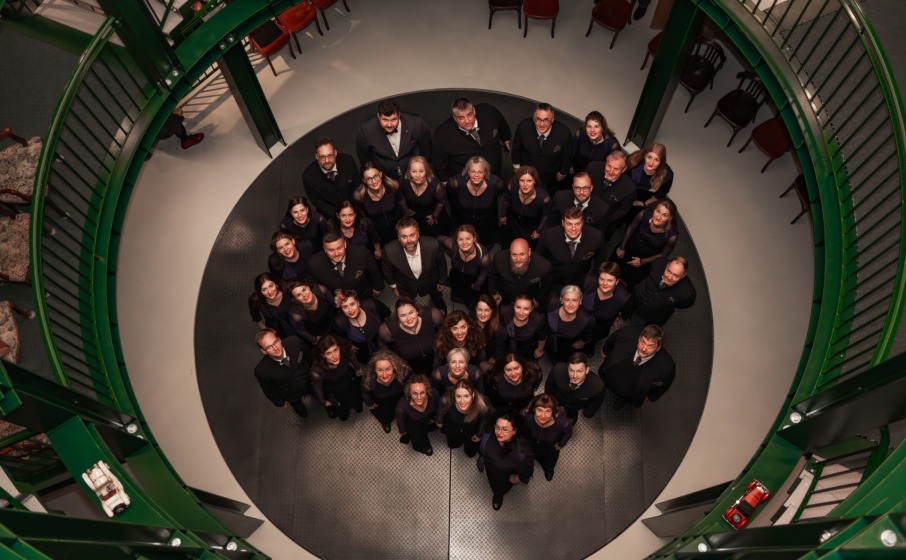
ŠIAULIAI POLIFONIJA STATE CHAMBER CHOIR (Lithuania)

Artistic Director and Chief Conductor Linas Balandis

In 1974, choir conductors Danutė and Sigitas Vaičiulioniai formed the Early Music Ensemble, which performed its first concert on December 31 in the assembly hall of Šiauliai Pedagogical Institute, featuring Renaissance and Baroque music. This was not only the birth of a new music group, but also the tradition of inviting the citizens of Šiauliai to send off the old year with music on New Year's Eve. Later on, the ensemble's activities expanded, the number of concerts increased, and after five years the group has been given the name of the choir Polifonija and the status of the People's collective.

The culture of choir performance, repertoire and abundance of concerts led Polifonija towards new creative achievements. In 1986, the choir outgrew its teenage amateur shirt and became a professional team – Lithuanian State Philharmonic Chamber Mixed Choir of Šiauliai.

In 1998, the choir separated from the Lithuanian National Philharmonics and became a mature Šiauliai State Chamber Choir Polifonija. Since then, the choir's status has not changed, only the repertoire, the repertoire of Renaissance and Baroque works, which have become the Polifonija’s tradition, is being replaced by the works of composers of various epochs and countries, with great attention to the spread of Lithuanian choral music in Lithuania and the world.

The Choir Polifonija regularly performs in various countries of the world conducted by excellent national and foreign conductors, such as Saulius Sondeckis, Juozas Domarkas, Gintaras Rinkevičius, Vytautas Miškinis, Vaclovas Augustinas, Modestas Pitrėnas, Robertas Šervenikas, Ravil Martynov (Russia), Vladimir Begletsov (Russia), Karmina Šilec (Slovenia), Georg Mais (Germany), Mats Nilsson Sindenius (Sweden), Magnus Wassenius (Sweden), Ingo Ernst Reihl (Germany), Anthony Trecek-King (USA), Richard Bjella (USA), Dante Anzolini (Italy), Ferdinando Sulla (Italy), Gary Graden (Sweden), Agnieszka Franków-Żelazny (Poland),  and others. The biography of concert tours includes Italy, Brazil, Argentina, Germany, Austria, Russia, Sweden, Ukraine, Poland, Czech Republic, Bulgaria, France, Latvia, Estonia.

The choir has performed with the Lithuanian Chamber Orchestra, Klaipėda Chamber Orchestra, St. Christopher’s Orchestra, Klaipėda State Musical Theatre Orchestra, Lithuanian National and Lithuanian State Symphony Orchestra, Orchestra Hamburger Camerata, Lviv (Ukraine) Philharmonic Orchestra, St. Petersburg (Russia) Symphony Orchestra and other string and wind orchestras from different countries.

Every year the choir participates in various music festivals in Lithuania and abroad, thus spreading the charm of Lithuanian choral music.

Hortus Musicus and Andres Mustonen

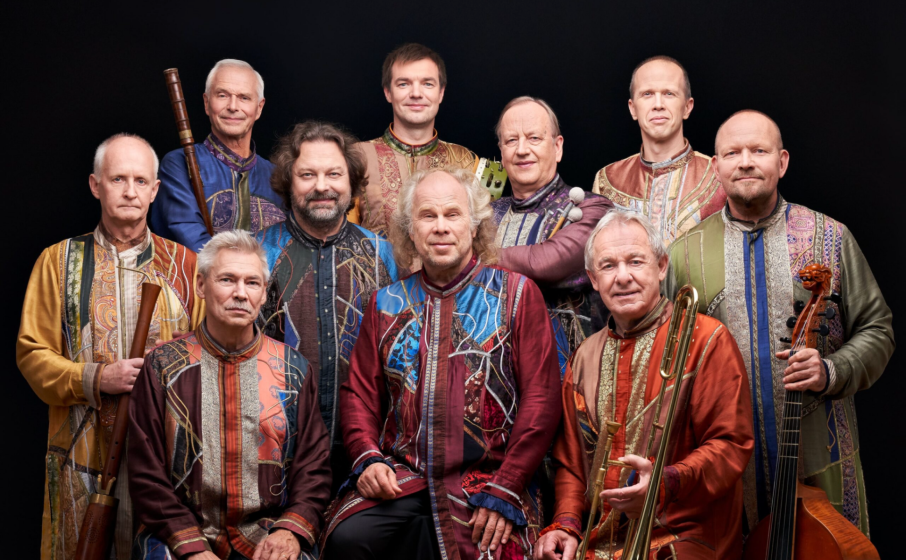
Hortus Musicus chimes through the times Such an age is phenomenal for a chamber ensemble and Hortus is the oldest constantly active early music group in Europe. It is impossible to directly classify the ensemble. Although based on academic education, the group, created in 1972 under the leadership of Andres Mustonen, a fervent dissenter, immediately found their own music, which had been practiced very rarely in the then Soviet Union but also in the rest of Europe. It was the early music that corresponded to the energetic wish of the young people to discover something unprecedented. During their long history, Hortus Musicus have passed through the entire musical history of Europe from the Gregorian choral to the great Baroque composers of the 18th century. A list of the repertoire of Hortus would be very long. It would be easier to say that there is no genre or period in European early music that has not appeared in the programmes of the ensemble throughout the 35 years. The secret of the longevity of Hortus Musicus is hidden in their approach of uncompromised creativity, and the title ‘early music ensemble’ only concerns the musical material. The music itself is reborn with every rehearsal and presentation, the “old” music becoming “own” and “new”. It is natural that already in the very beginning a good understanding was established with many other musical dissenters in Estonia and Russia. For instance, the strikingly minimalist tintinnabuli-style works of Arvo Pärt were performed at the end of the 1970s exactly in cooperation with Hortus Musicus. Later on, composers like Giya Kantsheli, Aleksander Knaifel, Lepo Sumera, Erkki-Sven Tüür, Galina Grigoryeva and several others have written and dedicated music for the ensemble. The restless artistic nature and inexhaustible energy of Andres Mustonen, the charismatic leader and conductor of the ensemble, has as a natural course of events taken him in front of the great orchestras of Europe, this process continuing with increasing speed. As a fiery creative person he has managed to cross the line between academic and alternative (early music, jazz, rock, folk) ways of making music. A real musician knows no boundaries. Since its early years, “HM” has been a praised and warmly welcome visitor to various music festivals in cities all over the world – Berlin, Munich, Paris, London, Moscow, St. Petersburg, Boston, Venice, Warsaw, Krakow, Tel Aviv, Copenhagen, Prague, Bratislava, Antwerpen, Bristol, Glasgow, Helsinki, Willach, Hetta, Malmö, Stockholm, Lockenhaus, Wien, Lintz, Innsbruck, St.Gallen, Herne, Würtzburg, Regensburg, Zaragoza, Utrecht, etc. In addition to the festivals, the ensemble performs on concert tours in practically all European countries, and has similarly been to America, Japan and Israel. The group has published more than 20 records, all of which musically as wholesome as concert programs: “Gregorian Carols”, “Early polyphony”, “Daniel’s Play”, “Francesco Landini and Trecento”, “Secular Music of the Middle Ages”, “Venetian Canzons”, “16th Century French Dances and Chansons”, “Spanish Golden Age”, “Music at the Baltic Sea”, “Chamber Music of Gustav Vasa”, “G. Ph. Telemann’s Parisian Quartets”, the music of different 16th-17th century European courts on the record “Maypole”. The actions of “Hortus Musicus” have been displayed in three films: “Centuries in Stone and Music”, “Jug on the Spring”, “Garden of Music” and in several TV-programs. The ensemble currently includes 10 musicians – 3 singers and 7 instrumentalists: Andres Mustonen – violin, artistic leader Olev Ainomäe – shawns, recorders, shalmey Tõnis Kaumann – barytone Imre Eenma – violone Valter Jürgenson – trombones Tõnis Kuurme – curtal, shawn, recorders, rauschpfeiff Riho Ridbeck – bass, parcussion instruments Ivo Sillamaa – harpsichord, organ Anto Õnnis – tenor Taavo Remmel – double basso The activities of Hortus Musicus have always been accompanied by a thirst for harmony, love, beauty and life in any kind of music. Therefore, the repertoire of the ensemble has naturally expanded across times and countries. Andres MUSTONEN is a highly individual Estonian-born violinist and conductor. With everything he does, he expresses his original outlook and musical cognition, be it conducting symphonies by Mahler and Shostakovich or the Vienna classics. His activities as conductor follow the curves of the music history. The core of his repertoire is made of oratorios, passions and dramatic symphonic works. He is strikingly active in performing compositions by his contemporary composers with whom he feels a profound creative relation, like Gubaidulina, Penderecki, Kancheli, Silvestrov, Knaifel, Tüür, Pärt, and Terterjan. With passion and dedication has Mustonen moved in music and felt its waves carrying him high. He got his musical education at Tallinn Academy of Music, but his progress is music has been anything but academic and conventional. As a young schoolboy, he was fanatically dealing with the avant-garde music, composing and creating happenings. Then, in the 70s, he turned his interest to the sources of the European Christian tradition, and as a student founded his consort Hortus Musicus. Since then, he has been the artistic leader of this extraordinary group which now performs without frontiers, both in terms of space and time, as its repertoire ranges from Indian, Arab and Jewish traditional music to the most contemporary compositions. In addition to this, Mustonen likes playing chamber music with his friends and fellows, and has recently created his Art Jazz Quartet. He travels widely from neighbouring Latvia, Russia and Finland to far-away Brazil, Mexico and Israel, and all over Europe to perform with local orchestras, with Hortus Musicus, or as a soloist.

Choir LOGOS

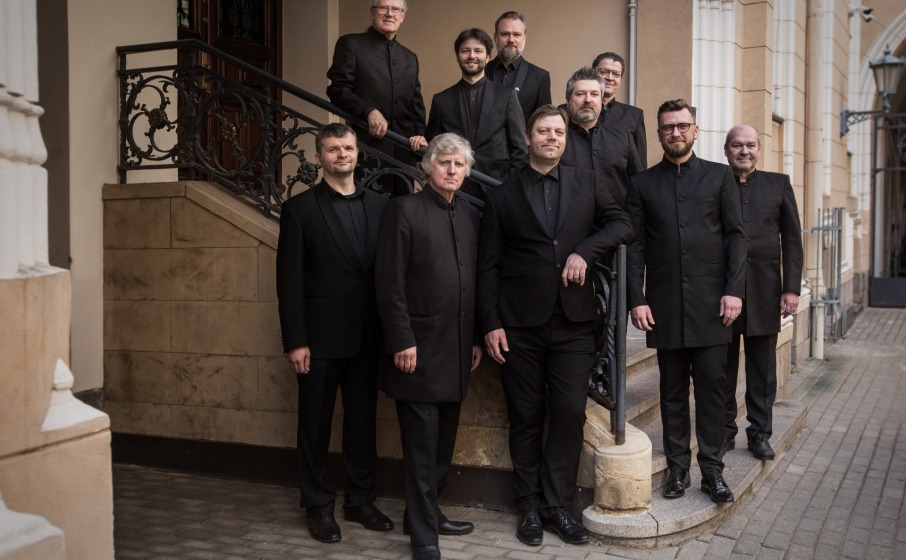
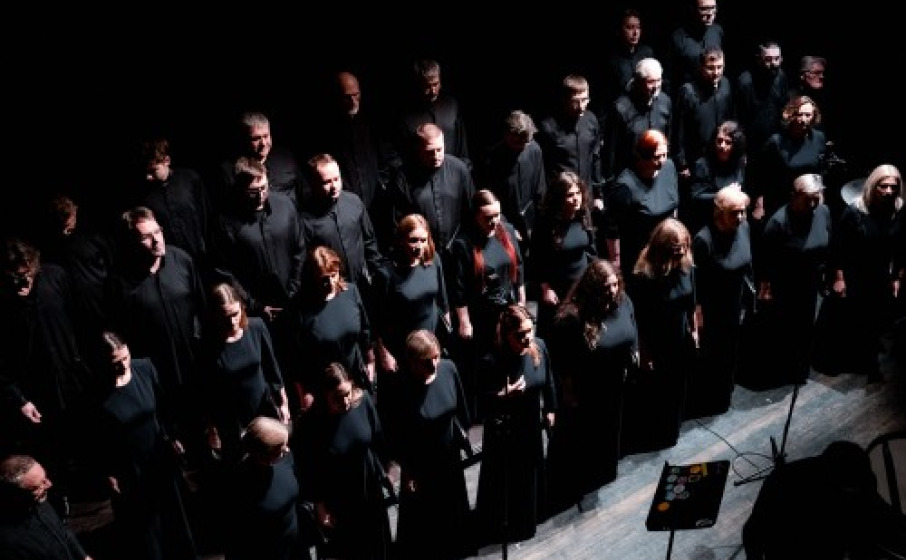
The whole history of the choir Logos (from Greek λόγος - word, idea, teaching) could not have been made without the inspiration of a great personality, a talented musician, a conductor, the priest Ioanne Shenrock. His long nurtured idea of gathering experienced singers together to perform orthodox church music for the first time became a realty during the first years of the independence of Latvia when many people experienced a genuine interest in the traditions of sacred choir music. Leading the Latvian Culture Fund’s Choir during the 90-ties in the previous century, Ioanne Shenrock gave many performances in Latvia, Russia, Germany, and elsewhere in Europe, receiving recognition at international festivals and competitions. In those days the most impressive achievment of the choir was definitely Apocalipsis, a monumental piece by contemporary Russian composer Vladimir Martinov and staged by the legendary founder and producer of Taganka Theatre in Moscow, Yury Lubimov (CD recorded in 1995), as well as the primacy at the International Festival of Orthodox Church Music in Hajnówka, 1997. In November, 2013 blessed by His Eminence Alexander, the Metropolitan of Riga and all Latvia, after some period of silence, the choir reemerged as the new strong male chamber choir Logos consisting of 12 experienced, accomplished and highly dedicated choir singers. The choir's first public appearance - participation in liturgical festive services at the Riga Nativity of Christ Orthodox Cathedral was immediately appreciated. However, the choir gained the attention of the public precisely through its concert activities. As a result of its further activities, the choir developed into an independent concert unit without any connection with the structures of the church. The basis of the choir's repertoire consists of music of different regions and cultural traditions with sacral texts, from ancient church singing to contemporary composers' writings. In addition, in its extensive work, the choir has also prepared programmes of European sacred music, Latvian and world classics. Cooperation with many domestic and foreign soloists, singers, instrumentalists and even music groups allows you to change the composition of the choir depending on the program. Cooperation with contemporary composers from the Baltic States, Finland and Russia also helps to diversify the programmes. However, the choir's most striking business card is the emotional, dramatist-saturated singing of the Great Fast, as well as the classical concerts of the Orthodox music choir created by professional composers. The Choir’s name logos is deeply symbolic as its mission is to retranslate to the audience an essence of lyrics which is vital to create a special bound between the public and the musicians. Geography of choir's concert activities – Latvia, Estonia, Lithuania, Finland, Georgia, Poland, Russia, Belarus, Ireland, Switzerland, France, Cyprus, USA.

SUPERSONUS

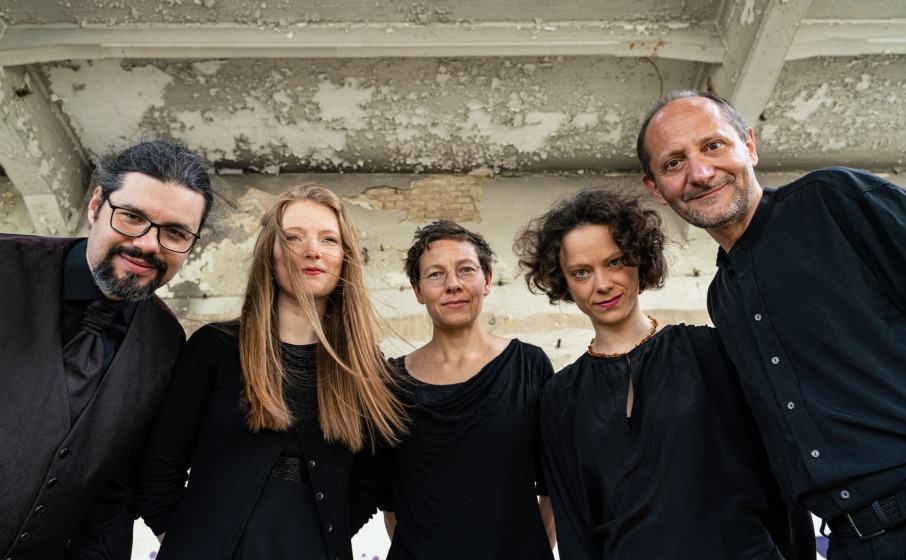
SUPERSONUS - THE EUROPEAN RESONANCE ENSEMBLE
Marco Ambrosini: Nyckelharpa | Wolf Janscha: Jew‘s Harp | Eva-Maria Rusche: Harpsichord Anna-Liisa Eller: Kannel | Anna-Maria Hefele: Overtone Singing
Ensemble SUPERSONUS brings the listener in touch with an intensely rich total sound, inviting to an imaginative journey by using one unique combination of different styles, instruments and musical expressions. Contrasts, dissimilarities and musical extremes are not perceived as a conflict in SUPERSONUS, but experienced and expressed as a deeply underlying power of their music. They see themselves as bridge-builders, from a cultural and also from a musical point of view. On the traces of well-known themes and ostinati SUPERSONUS lead their listeners through wide times and spaces, full of colourful dream images and layers of timbres. They combine indian rhythms with energetic baroque splendor, nordic melancholy with jazzy harmonies, african patterns with renaissance drinking songs, rhythmical ambiguity with appealing, catchy melody, trance-like ecstasy with oriental delicacy, dark depths with brightly glimmering sound clouds.

Rokas Diržys (violin)

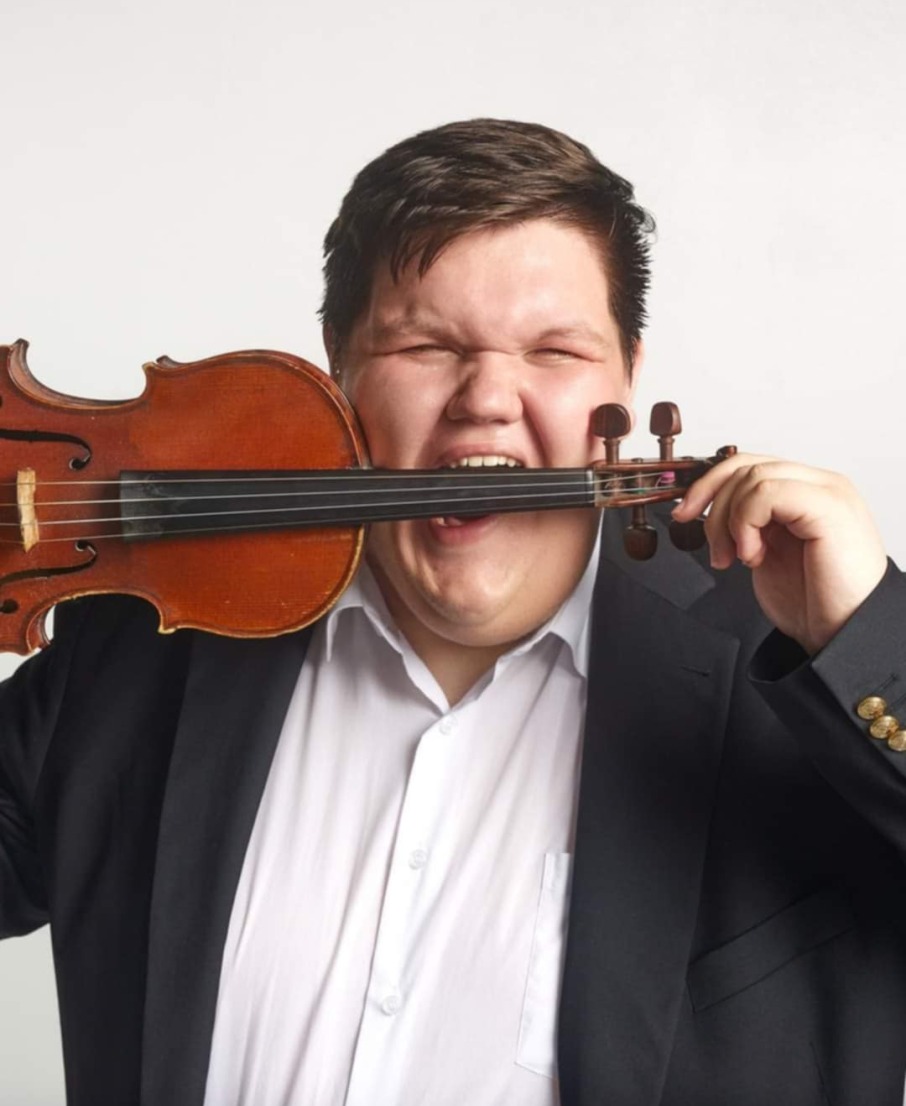
Rokas Diržys was born in 2008 and began playing the violin at the age of seven. The young violinist studied at the Kaunas 1st Music School, and since 2023 he has been studying at the National M. K. Čiurlionis School of Arts in the violin class of Prof. Rūta Lipinaitytė. He is currently a scholarship holder of the Mstislav Rostropovich Charity and Support Foundation “Help for Lithuanian Children.”

Rokas has received numerous awards in national and international competitions. Among them are the Laureate Diploma at the National Balys Dvarionas Competition for Young Pianists and String Players (2020, 2022, 2024), the Grand Prix at the 3rd and 4th Republican Algimantas Livontas Competition for Young String Players (2021, 2024), the Grand Prix at the international competition Premio Scarlatti, first prize at the competition-festival Music Without Borders (2024), second prize at the International Saulius Sondeckis Competition (2024), first prize at the 6th National Juozas Urba String Competition (2022), and first prize at the 5th International V. Radovičius String Competition (2019).

In 2024 Rokas Diržys won First Prize at the 12th International Balys Dvarionas Competition for Young Pianists and String Players, where he was also awarded eight special prizes, including monetary and concert awards. In 2025 he became a diploma laureate and Audience Prize winner at the 7th International Jascha Heifetz Violin Competition. In the same year he also won first prize at the International Andrea Postacchini Violin Competition and the International G. Ph. Telemann Violin Competition.

Rokas has received several honorary certificates from the Mayor of Kaunas, Visvaldas Matijošaitis, as well as the “Lithuanian Maximalists” scholarship for achievements in music (2020, 2021, 2023) and scholarships from the Latvian support foundation “VIVAT Future Multitalent” (2021, 2023). In 2024 the young violinist participated in a residency organized by LRT KLASIKA, during which he was introduced to Lithuanian audiences through radio programmes and performed a solo recital at the Sapieha Palace, broadcast live on LRT KLASIKA. In 2025 he was awarded the “Young St. Christopher” prize.

Rokas has performed as a soloist with orchestra on several occasions. Among the most memorable performances was a concert at the Lithuanian National Philharmonic Hall in 2024, where he performed Balys Dvarionas’s Violin Concerto with the Lithuanian National Symphony Orchestra conducted by Martynas Staškus. In 2025 he performed Jean Sibelius’s Violin Concerto with the same orchestra conducted by Modestas Pitrėnas. The young violinist has also performed with the Lithuanian State Symphony Orchestra and the St. Christopher Chamber Orchestra.

Inspired by Rokas’s interpretation, composer Giedrius Kuprevičius arranged his work Four Strange Dances for solo violin and wind orchestra. In 2022, after more than five decades, the piece returned to the concert stage, with Rokas performing the solo part together with the wind orchestra “Ąžuolynas.”

Rokas continuously develops his musical skills in masterclasses and has participated in open lessons with renowned violinists and professors including Pierre Amoyal, Zakhar Bron, Andrey Baranov, Christian Altenburger, Philip Draganov, Džeraldas Bidva, Martynas Švėgžda von Bekker, and Dalia Dėdinskaitė.

Rokas performs on a violin by Stefano Pietro Greiner, provided by the SIMA (Swiss International Music Academy).

In February 2026 he won the Grand Prix at the 10th International A. Dombrovskis Competition in Riga after three rounds.

Elzė Fedorcovaitė

Lithuanian pianist Elzė Fedorcovaitė is a laureate of more than thirty international competitions and a rising performer whose playing combines technical mastery, expressive depth, and artistic versatility. She has performed in major European concert halls and appeared with the Lviv, St. Christopher, and Lithuanian Academy of Music and Theatre chamber orchestras, as well as with the Kielce (Poland) and M. K. Čiurlionis symphony orchestras.

Elzė’s artistic achievements have been recognized with top prizes at numerous international competitions in Italy, Sweden, Poland, the United Kingdom, and Lithuania, both as a soloist and as a chamber musician. Together with Malaysian violinist Yik Liang Soo, she founded the Eunoia Duo, which has received recognition at several international competitions. Since 2023 she has also been actively performing with the Chiara Piano Trio, alongside Soo and American cellist Khalil Johnson.

Her chamber music artistry has been developed through collaborations with renowned musicians such as Shunske Sato, Patricia Kopatchinskaja, Peter Brunt, Ellen Corver, Joseph Swensen, and Maya Iwabuchi. As a solo pianist she has worked closely with distinguished performers including Nikolai Lugansky, Andrzej Jasiński, Dina Yoffe, Eugène Indjic, Mūza Rubackytė, Andrius Žlabys, and Erik T. Tawaststjerna. Her recitals have been presented in Poland, France, Germany, Italy, Denmark, Finland, and Lithuania.

In 2020 Elzė graduated from the National M. K. Čiurlionis School of Arts in Vilnius, where she studied in the class of Prof. Aleksandra Žvirblytė. In 2024 she graduated with honours from the Royal Conservatoire of Scotland, studying under Fali Pavri and Petras Geniušas. She is currently pursuing her master’s degree with Prof. Paolo Giacometti at the Robert Schumann Hochschule in Düsseldorf.

Luca Scandali

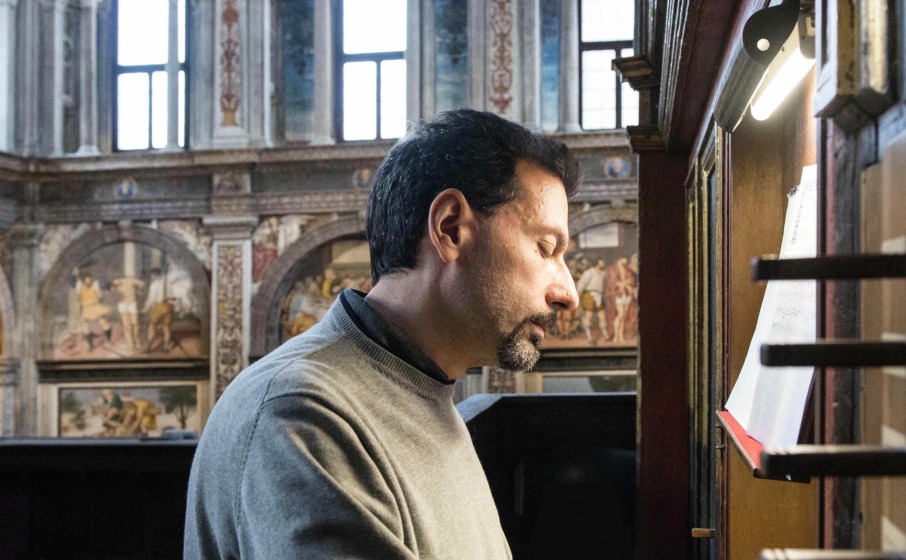
LUCA SCANDALI was born in Ancona (Italy).
He received a diploma in Organ and Composition for Organ (Professor Patrizia Tarducci) and Harpsichord with first-class standings at the Conservatory “G. Rossini” of Pesaro, where,
subsequently, he obtained a diploma in Composition (Professor Mauro Ferrante). He continued his studies under Ton Koopman, Andrea Marcon, Luigi Ferdinando Tagliavini and
Liuwe Tamminga.
Furthermore, he devotes his time to research into the problems inherent in the performance practice of Renaissance, Baroque and Romantic music, through the study of treatises and original instruments. He won the first edition of the scholarship “F. Barocci” (Ancona) for young organists in 1986. Then, in 1992 he won the third prize at the First International Organ Competition “Città di Milano”, in 1994 the fourth prize at the Eleventh International Organ Competition of Brugge and in 1998 the first prize at the Twelfth International Organ Competition “Paul Hofhaimer” of Innsbruck, whose jury awarded only four times over its 40-year history.
He has been invited to give masterclasses and courses at various prestigious venues (Corsi di Musica Antica a Magnano, University of Padua, Hochschule für Musik Johannes Gutenberg-Universität – Mainz, Fontys Conservatorium – Tilburg, Accademia di Musica Italiana per Organo – Pistoia, Antiqua Vox – Treviso, Conservatorio Superior de Música de Aragón – Zaragoza, Hochschule für
Musik und Darstellende Kunst – Stuttgart, ISAM International Summer Academy of Music – Ochsenhausen) and he has performed in important concert seasons and festivals in Italy and abroad
(Austria, Belgium, Czech Republic, Slovak Republic, Denmark, France, Germany, Holland, Japan, Malta, Mexico, Montenegro, Norway, Poland, Portugal, Serbia, Slovenia, Spain, Switzerland,
Ukraine, USA), both as soloist and in various chamber ensemble and orchestras (L’Arte dell’Arco – Padua, Cappella della Pietà dè Turchini – Naples, Orchestre National du Capitole de Toulouse, Florida International University Symphony Orchestra – Miami,Venice Baroque Orchestra – Venice). He has taught at the conservatories of Riva del Garda, Monopoli, Foggia and Perugia and he currently holds the teaching posts of Organ and Composition for Organ at the Conservatory “G. Rossini” of Pesaro.
For Il Levante Libreria Editrice (Tastata collection) he published the Canzoni de intavolatura d’organo fatte alla francese (1599) by Vincenzo Pellegrini (around 1562–1630). He has written and published musicological texts on various magazines as Arte Organaria e Organistica, Informazione Organistica and Orgues Nouvelles. He has recorded forty cds for Symphonia, La Bottega Discantica, Tactus, ORF Edition – Alte Musik, Dynamic, Arion – Pierre Verany, Motette, Deutsche Grammophon (with Venice Baroque Orchestra), CPO, Elegia Records, Antichi organi del canavese, Brilliant Classics, obtaining excellent reviews. Several recordings have obtained a nomination for the Preis der deutschen Schallplattenkritik.

GŠ Ensemble

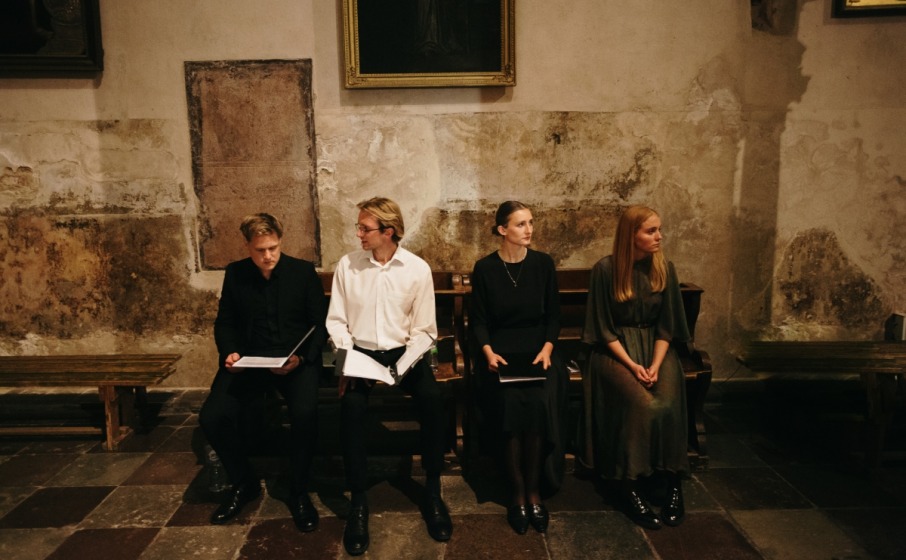
The Shrine of Divine Mercy Ensemble (dir. Gabija Vaičiulienė) is a vocal group dedicated to early sacred music, whose primary mission is singing in the Catholic liturgy at the Shrine of the Divine Mercy in Vilnius. The ensemble’s members study the history of Christian liturgical music and prepare historically informed liturgical music programs, such as the reconstruction of the Vilnius Bernardine liturgical manuscript Clavis Coelis (1760) and a program of Jesuit hymns of the Grand Duchy of Lithuania based on the hymnal Giesmės, tikėjimui katalickam priderančios (1646) by Salomonas Mozerka Slavočinskis (1624–1660), among others.

In addition to the local heritage of liturgical music, the ensemble also pays significant attention to the repertoires of Western European liturgical music, including Gregorian chant, Old Roman chant, the Notre Dame school of chant, and others.

The ensemble’s director Gabija Vaičiulienė holds Bachelor’s and Master’s degrees in Gregorian Chant from the Pontifical Institute of Sacred Music in Rome (Pontificio Istituto di Musica Sacra). Ensemble member Laurynas Adamonis holds a Bachelor’s degree in medieval musicology and performance and is currently pursuing a Master’s degree at the International Centre for Medieval Music (Centre International de Musiques Médiévales, CIMM) at Paul-Valéry University Montpellier.

Men’s Choir “Perkūnas”

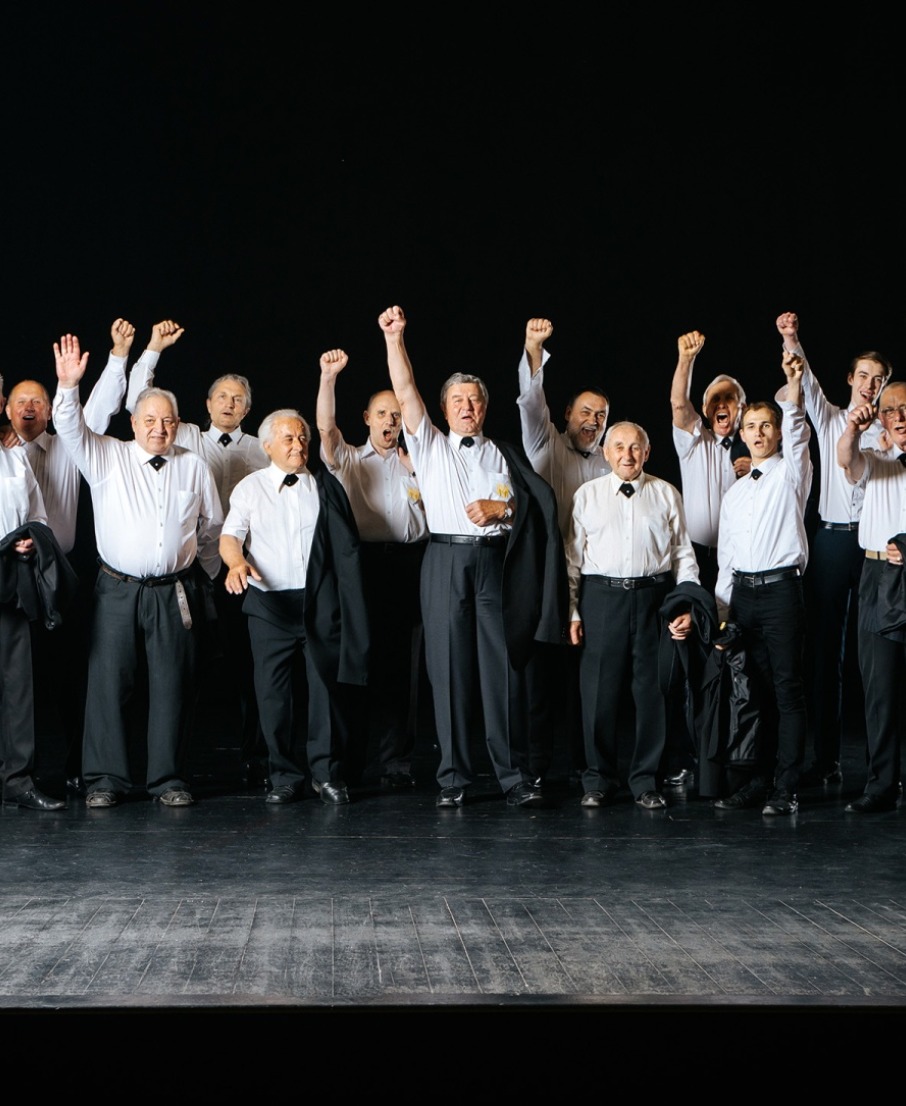
The men’s choir “Perkūnas” was founded in 1954 on the initiative of A. Čižas. Over the years, the ensemble has been led by well-known Lithuanian choral conductors: B. Mačikėnas, S. Serbenta, J. Strazdas, A. Viesulas, and P. Jurkonis.

From 1998 the choir was conducted by Prof. Romaldas Misiukevičius of the Vytautas Magnus University Music Academy, and since 2013 it has become an official ensemble of the Kaunas Cultural Centre. Over 27 years, R. Misiukevičius led the choir with dedication and professionalism, maintaining a high artistic standard and securing the ensemble’s top first-category status.

Since June 2025, the choir has been led by Gustas Kuskevičius, who continues the work of R. Misiukevičius and the previous conductors.

During its 70 years of creative activity, the choir has prepared numerous concert programs and participated in all Lithuanian Song Festivals. “Perkūnas” is a member of the European association “Male Choirs (TTBB) Europe” and maintains close collaboration with similar choirs from Lithuania, Estonia, Latvia, Germany, and Switzerland.

The choir cherishes long-standing traditions. Each year it sings at Masses in various Lithuanian churches in memory of deceased choir conductors, choristers, and their family members. At the invitation of the Kaunas City Municipality, the choir has also performed several times in the Kaunas Sports Hall on the occasion of the International Day of Older Persons.

Every year the choir presents more than 20 concerts in many Lithuanian towns and cities, as well as abroad – in Poland, Hungary, Latvia, Germany, Estonia, and the Czech Republic.

Conductor and Artistic Director: Gustas Kuskevičius
Pianist / Accompanist: Goda Palskytė-Mineikienė

Mixed Choir “Cantare”

The mixed choir “Cantare” of the Klaipėda Cultural Centre “Žvejų Rūmai” (founded in 1990 by Vydmantas Ruzgys) counts more than three decades of activity and is currently one of the strongest amateur choirs in Lithuania.

From 2000 the choir was led by Prof. Artūras Dambrauskas. In 2016 and 2018 the choir received the highest First Degree diplomas at the International Stasys Šimkus Choir Competition in Lithuania, as well as silver and gold diplomas at the international choir competitions and festivals “Laurea Mundi Budapest” in Hungary and “Musica Eterna Roma” in Italy. In 2022 the choir won First Prize at the “Musica Orbis Prague” festival in the Czech Republic.

In the Lithuanian Choir Ranking Competition held in 2023, the choir placed second. In spring 2023, under the direction of Ramūnas Baršauskas, the ensemble received the Best Choir and Conductor Award at the Juozas Naujalis Festival and Competition, and later that year won First Prize and the Grand Prix at the international choir festival and competition “Per Musicam ad Astra” in Toruń, Poland. In 2024 the choir was awarded First Degree diplomas at the International Stasys Šimkus and Gdańsk Choir Competitions.

In 2025 the choir “Cantare” and its conductor Ramūnas Baršauskas received the prestigious Lithuanian amateur arts award “Golden Bird” in the category Best Adult Choir and Conductor.

Since July 1, 2023, the choir has been led by Ramūnas Baršauskas. “Cantare” actively participates in national festivals, Song Festivals, competitions, television projects, and cultural events across the country. It is a well-known choir in Western Lithuania, distinguished by a diverse and colorful repertoire ranging from sacred music to folk, modern, and unique electronic compositions.

Although the choir members are amateur singers of different ages and professional backgrounds, this does not prevent them from performing complex and professional-level works. Their shared joy of singing and strong spirit of solidarity continually motivate the choir to improve, move forward, and present ever more compelling and distinctive performances.

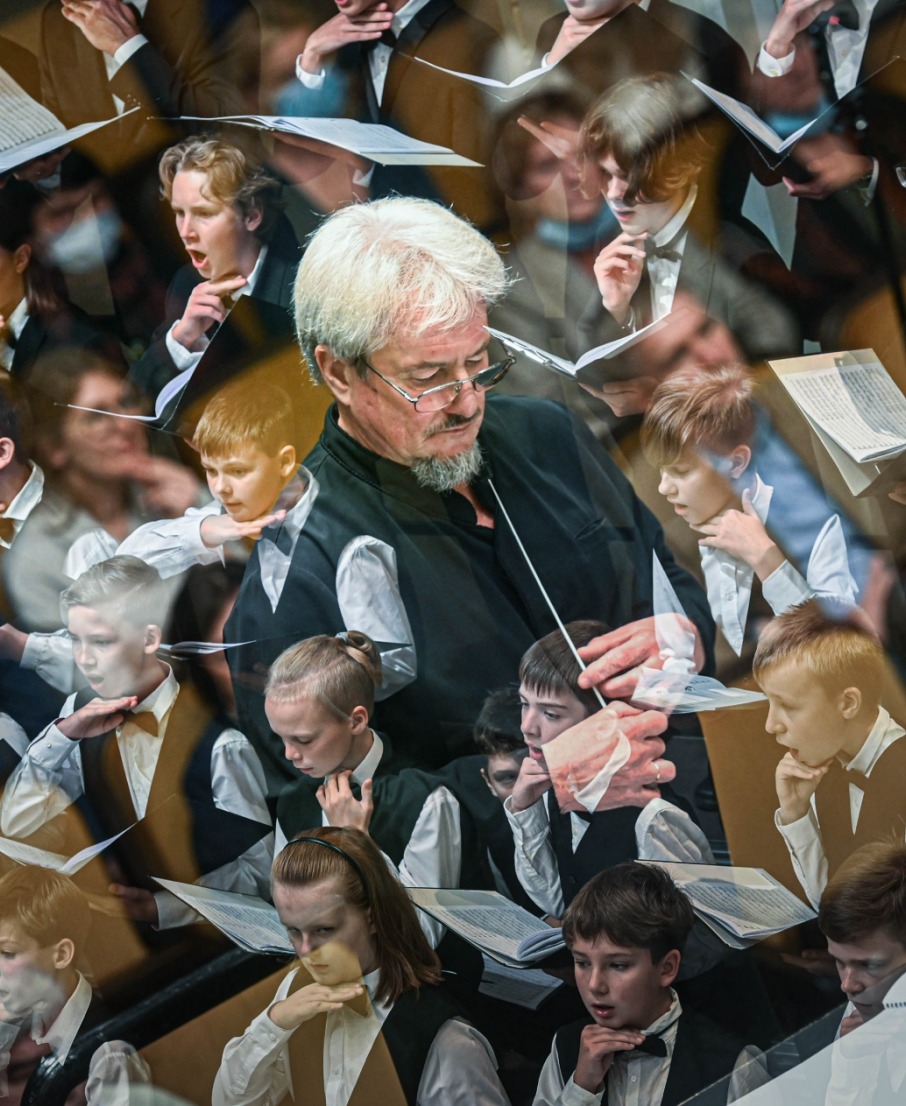
Ąžuoliukas” Boys’ Choir

“Ąžuoliukas” is a boys’ and young men’s choir founded in 1959 by Maestro Hermanas Perelšteinas. Today, “Ąžuoliukas” is one of the most recognizable names in the Lithuanian music world. It is a unique combination of several choirs—from the youngest children to adult men—and a music school. It is a fertile environment in which dozens of renowned Lithuanian musicians have matured.

However, in “Ąžuoliukas” boys receive far more than the foundations of musical education. Perhaps that is why many members of the ensemble readily describe “Ąžuoliukas” as a school of life and a second home—a space where a child grows and matures into an independent person.

Nevertheless, singing and music remain the core of “Ąžuoliukas.” Today the institution consists of eight choirs, bringing together several hundred children, teenagers, and men. It is no longer surprising to see fathers and sons traveling to rehearsals together and standing side by side on stage. They represent different generations but share an indescribable bond. Both are “ąžuoliukai,” and it would be equally difficult for either of them to explain to an outsider what this identity truly means. Being an “ąžuoliukas” is far more than rehearsals and concerts, music lessons and examinations. Long ago the organization outgrew the traditional framework of musical training, becoming a kind of forge of personality, leaving a lasting mark on everyone who has spent any significant time in the ensemble.

Over the decades, the choir has accumulated an extraordinary record of musical achievements. The ensemble is well known far beyond Lithuania’s borders: thousands of performances, hundreds of concert halls, and dozens of countries around the world. Its repertoire includes thousands of works performed together with numerous orchestras under the baton of distinguished Lithuanian and international conductors. “Ąžuoliukas” has participated in musical events across nearly every possible genre, and some composers write works specifically for this choir. Today “Ąžuoliukas” has grown into a mighty tree that has been—and remains—a home to several thousand boys.

Vytautas Miškinis

Vytautas Miškinis (b. 1954) is a choral conductor, pedagogue, and composer whose music is widely performed both in Lithuania and abroad. He has composed more than 400 secular works and about 150 sacred compositions, as well as over 100 song arrangements and orchestrations for various instrumental ensembles.

A significant part of his output consists of music for children, influenced by his long-standing work with the “Ąžuoliukas” choir. In his compositions, Miškinis pays careful attention to the age of the performers, their vocal capabilities, stylistic characteristics, and contemporary musical tendencies. His works demonstrate a close connection between music and poetic text. His sacred compositions are most often based on Latin texts. The musical texture is typically melodic–harmonic, occasionally incorporating elements of polyphony, aleatorics, or sonoristic techniques.

Rimvydas Mitkus

Rimvydas Mitkus (Organ)

Rimvydas Mitkus was born on May 29, 1989, in Krinčinas (Pasvalys district, Lithuania). In 2014 he completed his Master’s studies at the Lithuanian Academy of Music and Theatre, graduating from the organ class of Prof. V. Survilaitė. He has further developed his skills in numerous masterclasses with professors such as C. Bürklin, T. Jellema, A. Castaldo, B. Gfrerer, D. Tagliente, S. Tcherepanov, U. Th. Wegele, and others. In 2010 he studied at the Paris Conservatory through the ERASMUS program.

In 2009 Mitkus won Second Prize and a special prize from the Lithuanian Music Information Centre at the Juozas Naujalis Organists’ Competition. In 2012 he won First Prize at the same competition, and in 2014 he became the winner of the J. Žukas Competition for Church Organists. At the International M. K. Čiurlionis Organ Competition in 2015 he received a diploma and a special prize for the best interpretation of works by Mikalojus Konstantinas Čiurlionis, as well as the Audience Prize. He also received letters of appreciation from the President of Lithuania Dalia Grybauskaitė and the Prime Minister Algirdas Butkevičius.

Mitkus actively performs with various choirs and soloists in Lithuania and abroad, including Austria, Germany, Russia, Belarus, Italy, Poland, Hungary, the Netherlands, and Montenegro. He has participated in international festivals such as “Druskininkai Summer with M. K. Čiurlionis” and “Juniores Priores Organorium Sejnensis.” His concert repertoire includes not only organ classics but also his own transcriptions of various works.

In 2011 he recorded music for the DVD film “Senosios Pasvalio bažnyčių freskos” (“The Old Frescoes of Pasvalys Churches”). In 2013 he recorded Karl Jenkins’ “Requiem” on the organ of the Vilnius Cathedral Basilica. The same year he collaborated with multi-instrumentalist Saulius Petreikis on a concert program combining classical and original music featuring instruments from around the world together with the organ. In 2015 he recorded the CD “Lowlands” with Petreikis and SP Orchestra, performing the organ part.

Since 2010 Mitkus has worked as choirmaster and accompanist of the mixed choir “Ave Vita” at the Lithuanian University of Educational Sciences, and as a music teacher and non-formal education coordinator at the Vilnius Technology and Business Vocational Training Centre. Since 2013 he has taught at the Pasvalys Children’s Music School, where he leads the junior choir and the mixed choir “Canticum Novum,” which he founded. With this ensemble he received the highest award for amateur ensembles in Lithuania—the “Golden Bird” (2016), presented by the Lithuanian Ministry of Culture and the Lithuanian National Culture Centre.

In 2014 he received the Pasvalys Region Award for promoting and developing cultural life in the region and for contributing to the preservation and dissemination of its cultural traditions. Mitkus is a member of the Lithuanian Choral Union, and since 2015 he has served as a member of the Pasvalys District Municipal Council.